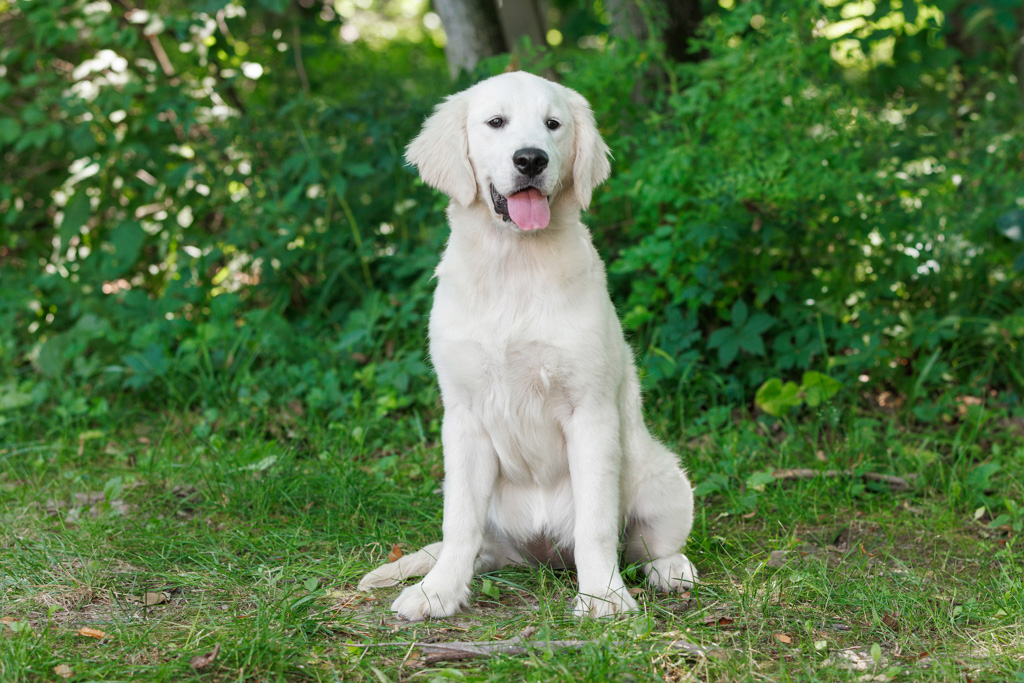
There is a funny moment in life with a Golden when you look at your dog and think, “You are way too big to still be acting like a puppy.”
And yet, here you are.
Your English Cream Golden Retriever may suddenly look almost grown. They are taller, stronger, more coordinated, and physically capable of doing things that would have seemed impossible only a few months ago. But inside that larger body is still a young dog learning how to make good choices.
Welcome to adolescence.
For many dogs, adolescence begins around six months of age and can continue well into the second year, with individual timing varying by dog. Golden Retrievers are often described as moving through a “teenage” phase from roughly 6 to 18 months, when curiosity, independence, energy, and changing hormones can all influence behavior.
This stage can catch families off guard because it often arrives just when puppyhood seemed to be getting easier.
Your Golden may suddenly seem less interested in listening. Recall that felt dependable may become a little shakier. Walks become more exciting because the world around them has become much more interesting. A dog who once stayed close may begin exploring farther or testing what happens when they make their own decisions.
None of this means your English Cream Golden Retriever has forgotten everything you taught them.
Adolescence is a developmental stage, not a training failure.
And with steady guidance, it can become one of the most rewarding periods in your relationship.
They May Look Grown Before They Feel Grown
One of the most important things to remember during adolescence is that physical growth and emotional maturity do not happen at exactly the same pace.
Your Golden may already look like a substantial adult dog while still making very puppy-like decisions.
That mismatch can create unrealistic expectations.
When a small puppy jumps, pulls toward an interesting smell, or gets distracted during training, people tend to be forgiving. When a much larger dog does the same thing, the behavior feels more significant.
But size does not automatically equal maturity.
Many dogs continue developing emotionally well beyond their first birthday. AKC notes that many reach emotional maturity somewhere between 12 and 18 months, though individual development varies.
So while your English Cream Golden Retriever may now be big enough to occupy most of the couch, they may still need patient reminders, clear routines, and plenty of opportunities to practice good decisions.
Think of it as a very large teenager with excellent hair.
You May See a Little More Independence
Young puppies often stay naturally close to their people.
As adolescence begins, the world gets much bigger.
Your Golden may suddenly notice scents they previously ignored. Other dogs become more interesting. The edge of the yard seems worth investigating. A bird fifty feet away may become the most fascinating thing your dog has ever seen.
This growing curiosity is normal.
Adolescent dogs naturally become more inclined to explore their surroundings, which is one reason skills like recall often need extra reinforcement during this stage. VCA specifically recommends continuing recall practice throughout adolescence and adulthood.
That does not mean your dog is becoming less bonded to you. It means they are becoming more confident in the world.
Your role shifts slightly during this stage. Instead of simply being your puppy’s entire universe, you become their trusted guide while they learn how to navigate everything beyond it.
“Selective Hearing” Is Often Part of the Stage
You call your Golden.
They look directly at you.
And then they appear to make a very thoughtful decision to continue doing exactly what they were doing.
It can be both funny and frustrating.
Adolescent dogs sometimes become less immediately responsive to familiar cues, especially when distractions increase. Research and veterinary guidance both recognize that adolescent dogs may appear more independent or less responsive during this stage.
The answer is not to assume your dog is being stubborn or to increase punishment.
Instead, go back to what worked when the behavior was first taught.
Make the environment easier. Use meaningful rewards. Practice the cue in several different places. Gradually add distractions rather than expecting your dog to perform perfectly everywhere.
A dog who understands “come” in the kitchen may still need practice responding at the park.
The skill did not disappear. The difficulty level changed.
This Is Not the Time to Stop Training
One of the biggest mistakes families can make is assuming basic training is finished once puppyhood ends.
Adolescence is actually a wonderful time to build on that foundation.
Your Golden is developing better physical coordination, greater stamina, and increased curiosity. Those changes can make training more interesting and rewarding for both of you.
Continue working on foundational skills such as recall, loose-leash walking, waiting at doors, calm greetings, and settling around distractions.
You can also begin increasing the challenge.
Practice in new locations. Ask for familiar behaviors while something interesting is happening nearby. Work on longer periods of focus and more reliable responses.
AKC specifically emphasizes ongoing training throughout adolescence rather than assuming that early lessons are complete.
At Majestic Manor Goldens, this is one reason we place so much value on giving puppies a strong early training foundation. Our Puppy Foundation and Good Puppy Citizen programs introduce practical skills like crate conditioning, leash manners, recall, waiting, place training, and working around distractions.
That foundation can make adolescence easier to navigate, but families still need to continue reinforcing those behaviors as their dog grows.
Training is not something your Golden graduates from. It becomes part of how you communicate with one another.
Boundaries May Need a Refresher
Adolescence often brings a little experimentation.
Your Golden may begin checking whether a familiar rule still applies:
- Can I jump on the counter now?
- Can I ignore “wait” at the door?
- What happens if I take this sock and run?
This does not necessarily mean your dog is intentionally challenging your authority. Young dogs are learning from what happens around them, and adolescence brings enough confidence to try new behaviors.
Consistency becomes especially valuable here.
If a rule matters to your household, continue reinforcing it calmly. Do not wait until a behavior becomes frustrating before addressing it. Make the desired choice easy and rewarding, and manage the environment when necessary.
Shoes can be put away. Food can be moved back from the counter. Gates can prevent unsupervised access to tempting areas.
Management is not cheating. It keeps your dog from repeatedly practicing habits you do not want while they are still learning.
Their Energy May Feel Different Too
Adolescent Goldens often have more stamina than young puppies.
That can be exciting because your dog is becoming capable of longer walks, more adventures, and more involvement in family activities.
But increased stamina does not mean your dog needs nonstop physical exercise.
Mental engagement remains extremely important during adolescence. AKC specifically notes the value of mental stimulation during this stage, especially as young dogs become more energetic and curious.
A balanced day might include a walk, some retrieving or play, a short training session, time to sniff and explore, and meaningful rest.
Sometimes families respond to adolescent energy by simply adding more and more exercise.
That can create a very fit dog who still has no idea how to settle.
Your Golden also needs practice doing nothing.
Learning how to rest nearby while the family goes about the day is an important adult skill.
Your Golden May Become More Aware of the World
Some adolescent dogs seem noticeably bolder. Others may temporarily become more cautious about things they previously ignored.
A trash can on the sidewalk, an unfamiliar sound, a new person, or an object in the yard can suddenly deserve a second look.
Development during adolescence is not always linear.
The best response is usually patient support rather than forcing interaction.
Give your dog enough space to observe. Reward calm curiosity. Allow them to investigate at a comfortable pace.
If a previously confident dog suddenly shows strong or persistent fear, or if behavior changes seem unusually intense, speak with your veterinarian or a qualified reward-based trainer rather than assuming everything is simply adolescence.
Normal developmental changes happen, but significant behavioral changes still deserve attention.
Social Skills Still Need Practice
Early socialization matters tremendously, but social learning does not end when your puppy reaches six months.
Your adolescent English Cream Golden Retriever is still learning how to behave appropriately around people, dogs, and unfamiliar environments.
That may mean practicing calm greetings rather than allowing every person to become an exciting event. It may mean choosing appropriate canine playmates instead of assuming every dog needs to be greeted.
It can also mean learning that sometimes the correct response to something interesting is simply to notice it and keep moving.
Social confidence is not about interacting with everything.
It is about feeling comfortable enough that your dog does not have to.
Give Them Opportunities to Make Good Choices
Adolescence is a wonderful time to begin trusting your dog with slightly more responsibility, but freedom should grow alongside reliability.
Perhaps your Golden earns more access to the house because chewing has improved. Maybe they can settle outside the crate while you work nearby. Maybe their leash skills are strong enough to explore new environments more comfortably.
Increase freedom gradually.
If your dog begins struggling, simply make the situation easier again.
Going back to a leash, gate, crate, or more structured routine does not mean you have failed. It means you are giving your dog the level of support they currently need.
Independence should be earned through repeated success, not granted simply because your puppy has gotten bigger.
Positive Reinforcement Still Matters
Adolescence can test patience.
It is tempting to respond more harshly when a dog seems to “know better.”
But knowing a behavior and being able to perform it reliably in the presence of distractions are not always the same thing.
Reward-based training remains the recommended approach for teaching and behavior modification. The American Veterinary Society of Animal Behavior recommends humane, reward-based methods rather than aversive techniques.
Continue noticing the things your Golden does well.
Reward the recall that happens despite an exciting smell. Reinforce the calm greeting. Notice when your dog chooses to settle instead of joining the commotion.
Those moments are how reliable adult behavior is built.
Remember How Much Is Changing at Once
Adolescence involves more than behavior.
Your Golden is growing physically, becoming more independent, developing socially, experiencing hormonal changes, and learning how to navigate a much larger world.
That is a lot happening at once.
It helps to approach this stage with the same patience you had when your puppy first came home.
You would not expect an eight-week-old puppy to understand every household rule immediately.
Your adolescent dog deserves some grace too.
They know more now, but the situations they are navigating are also becoming more complex.
This Stage Is Temporary, but Important
There may be days during adolescence when it feels like all your early work disappeared.
It did not.
The puppy who learned to trust you is still there. The training you practiced still matters. The relationship you built during those first months becomes especially important now.
Continue showing up.
Keep routines reasonably predictable. Keep training positive. Give your Golden appropriate outlets for their growing energy and curiosity. Maintain boundaries without turning every mistake into a confrontation.
Before long, many of the behaviors that felt unpredictable begin settling into something much more consistent.
You start seeing longer stretches of calm. Focus becomes easier. Your dog begins making better choices with less help.
And eventually, that oversized teenager begins looking and acting more like the adult companion you always knew was in there.
Adolescence Is Where the Adult Dog Starts Taking Shape
Puppyhood gets a lot of attention because everything is new.
Adolescence is quieter in some ways, but it may be even more important.
This is where your English Cream Golden Retriever begins putting everything together.
They are learning how to handle freedom, respond to distractions, settle after activity, and make choices without constant direction.
Your job is not to control every moment.
It is to provide enough consistency, encouragement, and guidance that your dog can keep growing into themselves.
There will be selective hearing.
There will probably be a few questionable decisions.
There may even be moments when you wonder where your perfectly trained puppy went.
Keep going.
The work you put into adolescence helps shape the confident, connected, well-mannered English Cream Golden Retriever who will share your family’s life for years to come.
Frequently Asked Questions
What age is adolescence in a Golden Retriever?
Adolescence commonly begins around six months of age. For Golden Retrievers, the teenage stage is often described as lasting roughly from 6 to 18 months, although individual dogs may mature sooner or continue adolescent behavior beyond that window. =
Why is my adolescent Golden suddenly not listening?
As adolescent dogs become more confident and interested in their surroundings, distractions become more powerful. Familiar skills may need to be practiced again in new environments and around greater distractions. This does not necessarily mean your dog has forgotten their training.
Do Golden Retrievers calm down after adolescence?
Most dogs become more emotionally steady and predictable as they mature, although personality and activity level remain individual. Continued training, appropriate exercise, mental stimulation, and opportunities to settle all help support that transition.
Should I increase exercise during adolescence?
Your Golden may have more stamina during adolescence, but physical exercise should remain balanced with mental stimulation, training, exploration, and rest. Simply increasing physical activity does not necessarily make a dog calmer.
Is it normal for an adolescent Golden to test boundaries?
It is common for adolescent dogs to explore more independently and become less consistently responsive. Continue reinforcing household expectations rather than assuming early training is finished.
Should I restart training if my Golden seems to regress?
You usually do not need to start completely over. Return temporarily to easier versions of familiar skills, increase reinforcement, reduce distractions, and gradually build difficulty again.
Can Majestic Manor’s training programs help prepare for adolescence?
Majestic Manor Goldens’ Puppy Foundation and Good Puppy Citizen programs introduce foundational skills such as crate conditioning, recall, leash manners, waiting, place training, and working around distractions. These skills provide a useful starting point, but families should continue to practice and reinforce them as their puppy matures.