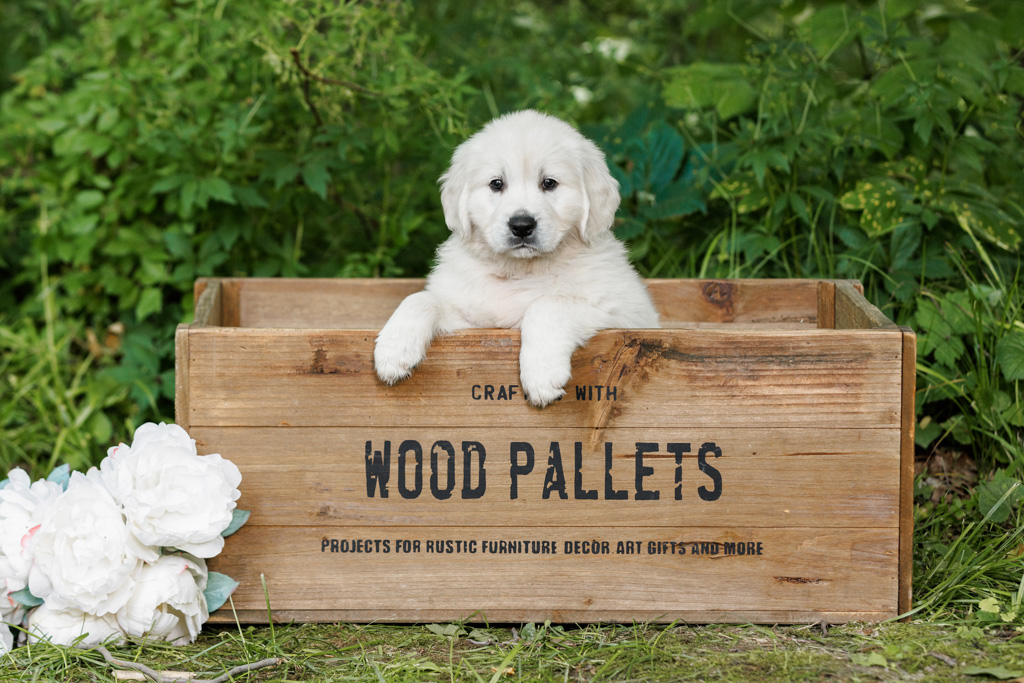
Back-to-school season changes the feeling of a home almost overnight.
For weeks, summer may have meant later mornings, more time outside, kids moving in and out of the house all day, and a Golden who had plenty of company from breakfast through bedtime.
Then the backpacks come out.
The alarm goes off earlier. The house gets quiet. Afternoons become more structured. Sports, homework, and school activities begin filling the calendar again.
For families, that shift is familiar. For an English Cream Golden Retriever, it can take a little while to get used to.
Dogs are remarkably observant when it comes to routines. They notice who is home, when people leave, what time meals happen, and when the household usually becomes active. When several of those patterns change at once, some dogs need a little help adjusting to the new normal.
That does not mean back-to-school season needs to be stressful. With a few thoughtful changes, your Golden can settle into the school-year rhythm right alongside the rest of the family.
Start Changing the Routine Before School Begins
One of the easiest ways to make the transition smoother is to avoid changing everything on the first day.
If your summer mornings have been relaxed and school mornings will begin much earlier, start gradually shifting the household schedule. Move wake-up times, breakfast, walks, and quiet time closer to the routine you expect to follow once school begins.
This gives your English Cream Golden Retriever a chance to learn the new pattern before the house suddenly becomes empty for several hours.
Even small changes help.
If your dog usually gets a long walk at 10 a.m. in summer but needs that activity before school, start moving it earlier over several days. If the kids have been spending nearly every afternoon with the dog, start building in short periods where your Golden rests independently while everyone is still home.
The goal is not to make summer feel less fun. It is simply to make the school-year schedule feel familiar before it becomes necessary.
Keep a Few Daily Anchors Consistent
The entire household schedule may change in August or September, but your dog does not need every part of the day to change with it.
A few predictable routines can make the transition feel much easier.
Breakfast, morning potty breaks, an after-school walk, dinner, and bedtime are all useful anchors. When those pieces remain fairly consistent, your Golden has a better sense of what to expect even when the rest of the day feels different.
This kind of predictability can be especially helpful for younger English Cream Golden Retrievers who are still learning how household life works.
Dogs do not need a rigid timetable. They simply benefit from knowing that certain things happen reliably.
Give Your Golden Something to Do After Everyone Leaves
The first quiet hour after the family leaves can feel especially different for a dog who has spent the summer surrounded by activity. A little enrichment can help ease that transition and give your Golden something positive to focus on as the house settles down.
That might mean offering a food puzzle, a safe stuffed toy, or part of breakfast in an enrichment feeder.
A short scent game before everyone heads out can also be a satisfying way to mentally engage your dog before the day gets quieter.
The goal is not to keep your Golden occupied every minute that the family is away. Learning how to rest comfortably is just as important. Think of enrichment as a way to help your dog move from a busy, social morning into a calmer part of the day, not as a replacement for constant companionship.
Do Not Mistake Quiet Time for Loneliness
It can be surprisingly hard for families to leave a dog who has had company all summer, and that guilt can sometimes lead to overcompensating with nonstop attention whenever everyone is home.
But dogs benefit from downtime too.
A healthy daily rhythm includes play, activity, connection, and rest. Your Golden does not need someone interacting with them every waking moment to feel loved or secure, and becoming comfortable with quiet time is an important part of growing into a confident adult dog.
If your English Cream Golden Retriever is comfortable in a crate, on a favorite bed, or in another familiar resting space, those quieter hours can become a normal and reassuring part of the day. That ability to settle independently is useful far beyond back-to-school season. It can make future changes like travel, work schedules, visitors, and appointments much easier to navigate.
Make Mornings Count
School mornings can be hectic, but even a little intentional time with your Golden can make a meaningful difference.
A short walk before everyone leaves can provide movement, fresh air, and a chance to connect before the day gets underway. A few minutes of training or retrieving in the yard may be enough to help your dog feel engaged without turning the morning into another item on an already packed schedule.
The goal is not to wear your dog out before 8 a.m. It is to give them a satisfying start to the day.
Mental activity can be just as valuable as physical exercise. Practicing a few familiar cues, allowing extra time to sniff during a walk, or offering a simple food puzzle can help your Golden feel fulfilled and make the transition into a quieter morning feel more natural.
Let After-School Time Feel Special Again
One of the nicest parts of the school-year routine is the reunion at the end of the day.
Your English Cream Golden Retriever may hear the bus, recognize the sound of the garage door, or somehow seem to know exactly when the kids are due home. That excitement is part of the fun, and it does not need to be eliminated. It simply helps to give it a little structure.
Encourage the kids to come inside calmly and give your dog a moment to settle before the greeting becomes too enthusiastic. Once everyone has reconnected, an after-school walk, some backyard play, or a short training session can become an easy family ritual.
These moments are good for the children too. After a long school day, time outside with a Golden can provide a chance to decompress, move around, and reconnect with something familiar and uncomplicated.
That small stretch between coming home and the rest of the evening can become one of the most meaningful parts of the new routine.
Watch for Signs Your Golden Is Struggling With the Change
Most dogs adjust to new routines with time, but it is worth paying attention to changes in behavior.
A Golden who suddenly becomes unusually restless, stops eating normally, has trouble settling, or begins showing distress when the family leaves may need more support.
Some dogs simply require a slower transition. Others may benefit from additional exercise, enrichment, or a midday visit.
The important thing is to notice patterns rather than assuming the dog is being difficult.
Ask yourself what changed.
Is the dog getting less exercise than during summer? Are they suddenly alone for much longer stretches? Has bedtime changed too? Are afternoons now so busy that family time has disappeared?
Often, a few practical adjustments make a significant difference.
Consider Midday Support for Long Days
Depending on your dog’s age and your family’s schedule, a full school or workday may be too long without a break.
Puppies, in particular, need more frequent potty breaks, more movement, and more supervision than adult dogs.
If everyone is away for an extended period, consider whether a trusted family member, neighbor, dog walker, or pet sitter can provide a midday break.
This does not need to become an elaborate second routine. A potty break, a little movement, fresh water, and some connection can make a long quiet stretch much more manageable.
As your Golden matures, their needs will change, and the amount of midday support may change with them.
Help the Kids Stay Involved in Daily Care
Back-to-school schedules get busy quickly.
Homework, sports, music lessons, and activities can leave very little unscheduled time. It is easy for the dog to become something the adults quietly manage while everyone else rushes through the week.
This is a good time to keep children connected to age-appropriate parts of the dog’s routine.
A child might help with a short training session after school, refill the water bowl, join the evening walk, or spend a few calm minutes brushing the dog under adult supervision.
These small responsibilities help preserve the relationship that developed during summer.
They also remind children that caring for a dog is not just something that happens when schedules are easy. Family life includes showing up consistently, even during busy seasons.
Keep Evenings from Becoming Too Full
Sometimes the school-year problem is not that the dog has too little happening.
It is that everything suddenly gets packed into the evening.
Kids come home, everyone talks at once, dinner starts, someone leaves for practice, homework begins, and the dog is expected to move smoothly through it all.
That can be a lot for a young Golden.
Build in some breathing room where possible.
After a little family interaction, your dog may be perfectly happy resting nearby while homework gets done. They do not need to participate in every transition.
If the evening has been especially active, a calm walk or quiet settling time may be more useful than another high-energy game before bed.
A dog who learns to relax while family life continues around them becomes much easier to include in a busy household.
Weekends Do Not Need to Undo the Weekday Routine
Weekends are naturally different, and that is okay.
There may be later mornings, family outings, sporting events, or more time spent together.
Your Golden can absolutely enjoy that flexibility.
The key is to keep enough of the basic rhythm intact so that Monday does not feel like a complete surprise.
Meal times do not need to happen at the exact minute every day, and walks can shift depending on family plans. But maintaining familiar cues around meals, rest, exercise, and bedtime helps preserve a sense of predictability.
Flexibility is healthy.
The goal is not sameness. It is stability.
Training Can Help Make the Transition Easier
Back-to-school season puts a spotlight on practical skills that are useful throughout a dog’s life.
Crate confidence, calm greetings, place training, leash manners, and the ability to settle independently can all make it easier to manage changes in household schedules.
At Majestic Manor Goldens, our Puppy Foundation and Good Puppy Citizen programs introduce many of these everyday skills before puppies go home. The Good Puppy Citizen program also includes training around distractions and place work, which can be especially useful once family life becomes busier.
That early foundation can be a wonderful head start, but families still need to maintain the habits at home.
The school-year transition is a great opportunity to reinforce them, since the same routines recur.
Remember That Your Golden Is Adjusting With You
Back-to-school season can feel hectic for everyone.
Parents are reorganizing calendars. Children are adjusting to new classrooms, teachers, and responsibilities. Dogs are learning that summer’s rhythm has changed too.
There is no reason to expect that adjustment to happen perfectly in a day.
Give your English Cream Golden Retriever time to learn the new routine. Keep the important parts of the day predictable. Protect opportunities for exercise, connection, and rest. Pay attention when your dog seems to need more support.
Most importantly, keep including them.
Summer may be over, but family life certainly is not.
There are still morning walks, after-school reunions, weekend adventures, cozy evenings, and plenty of ordinary moments when your Golden gets to be right where they want to be: with their people.
A New Season Can Bring a New Rhythm
One of the wonderful things about living with an English Cream Golden Retriever is watching them become part of every season of family life.
They learn summer.
They learn school mornings.
They learn the sound of backpacks dropping by the door and the excitement of everyone coming home again.
With a little patience, what initially feels like a major change simply becomes the next familiar rhythm.
And before long, your Golden may be waiting by the door every afternoon, somehow knowing that their favorite people are almost home.
Frequently Asked Questions
Do dogs notice when children go back to school?
Yes. Dogs learn household routines and often notice when family members begin leaving at different times or spending fewer hours at home. Some adjust immediately, while others need time to become comfortable with the new pattern.
How can I prepare my Golden Retriever for the kids returning to school?
Begin adjusting wake-up times, walks, meals, and independent rest before school starts. Gradual changes can make the new routine feel less abrupt.
Should I exercise my Golden before leaving for school or work?
Morning activity can be very helpful. The amount should match your dog’s age and health, but a walk, play session, or short period of training can provide a satisfying start to the day.
Will my Golden be lonely while everyone is at school?
Many dogs are comfortable spending part of the day resting independently once they are accustomed to the routine. Appropriate exercise, enrichment, a comfortable resting area, and sufficient social time when the family is home all help create balance.
Does my puppy need someone to visit during the school day?
Young puppies generally need more frequent potty breaks and supervision than adult dogs. Depending on the puppy’s age and the length of the day, a midday visit from a family member, dog walker, or pet sitter may be appropriate.
What should I do if my Golden seems stressed by the schedule change?
Look at the entire routine and consider whether exercise, rest, companionship, or potty opportunities changed dramatically. Introduce changes gradually where possible. If your dog shows persistent or significant distress, speak with your veterinarian or a qualified reward-based trainer.
Can Majestic Manor’s puppy training help with family schedule changes?
Majestic Manor Goldens’ optional Puppy Foundation and Good Puppy Citizen programs introduce practical skills including crate conditioning, leash manners, waiting, place training, and working around distractions. Those foundational behaviors can make it easier for families to maintain structure as schedules change.