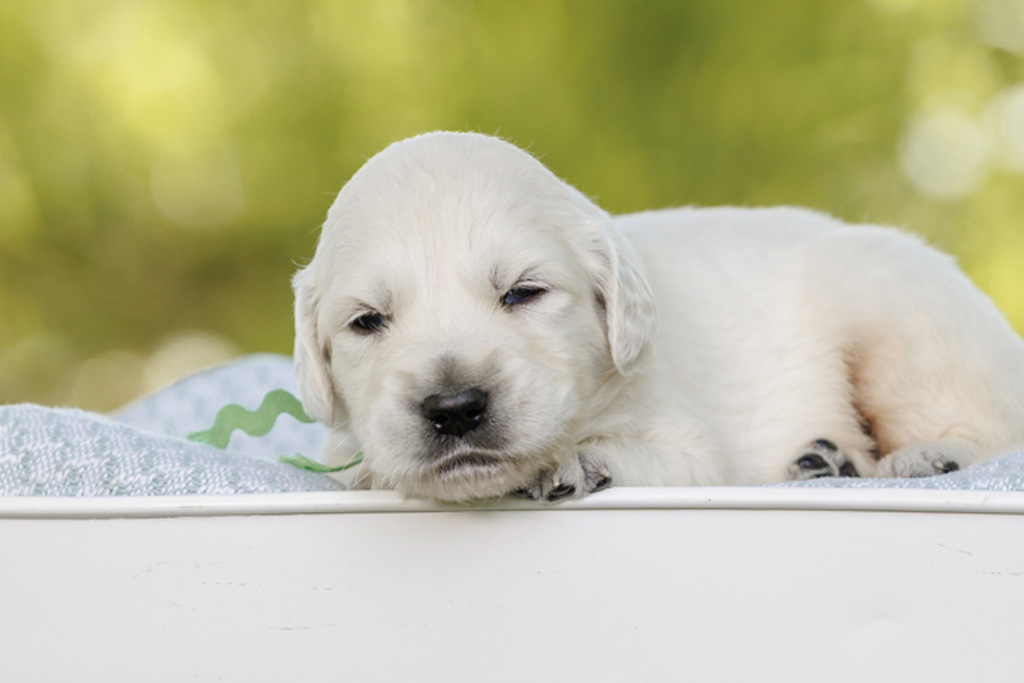
Some puppies seem determined to be involved in absolutely everything.
They follow you from room to room, wait outside the bathroom door, settle at your feet while you work, and immediately stand up the moment you move. At first, it feels sweet, and honestly, a lot of the time it is.
Dogs are social animals, and many puppies naturally seek closeness and reassurance from the people they trust most. English Cream Golden Retrievers, in particular, are deeply people-oriented and emotionally connected to their families.
But sometimes that closeness can become a little too dependent.
A puppy who struggles to settle alone, becomes distressed whenever their person leaves, or never learns how to feel comfortable independently may begin developing what many owners call “Velcro dog” behavior.
The good news is that attachment itself is not the problem. In fact, strong bonds are one of the best parts of life with a Golden. The goal is not to make your dog less loving. It is to help them feel secure enough that closeness becomes a choice rather than a need.
That balance starts early.
What Is a Velcro Dog?
A “Velcro dog” is a dog who becomes excessively attached to one or more people and struggles with separation or independence.
This can look like:
- Constant following
- Difficulty settling alone
- Distress when owners leave the room
- Excessive attention-seeking
- Inability to relax without physical proximity
Not every affectionate dog is a Velcro dog. Many puppies simply enjoy being near their people, especially during the adjustment period in a new home.
The difference is emotional flexibility.
A well-adjusted puppy can enjoy closeness while still feeling safe resting independently, spending time in a crate, or settling calmly without constant interaction.
Why Puppies Naturally Cling to Their People
From a developmental standpoint, attachment is normal.
When puppies leave their litter and enter a new home, they instinctively seek safety and connection. Following their owner is often their way of gathering information and feeling secure in an unfamiliar environment.
For young puppies, this behavior is expected.
In many cases, owners unintentionally strengthen clinginess because the behavior feels comforting and rewarding. Puppies are picked up immediately when they whine, constantly engaged when awake, or never given opportunities to settle independently.
None of this comes from bad intentions. Most families simply want their puppy to feel loved and secure.
Ironically, though, healthy independence is part of emotional security too.
Confidence and Independence Go Hand in Hand
One of the biggest misconceptions about independence training is that it means emotionally distancing yourself from your dog.
It does not.
Confident dogs are usually deeply bonded to their families. The difference is that they trust the relationship enough to relax when temporary separation happens.
Independence is really about helping puppies learn:
- They are safe even when not directly beside you
- Calm alone time is normal
- Separation is temporary
- Resting independently is rewarding
Dogs who develop these skills early often become more emotionally steady overall.
Start Teaching Independence Early
Many owners wait until clingy behavior becomes frustrating before working on independence.
It is much easier to build healthy habits from the beginning.
This does not mean forcing isolation or ignoring your puppy’s needs. It means introducing small, manageable moments of separation that feel safe and predictable.
For example:
- Encouraging naps in a crate or designated resting area
- Letting your puppy settle nearby instead of always in your lap
- Practicing short periods in another room
- Rewarding calm, independent behavior
These small experiences help puppies learn that independence is not something to fear.
Crate Training Can Build Confidence
When introduced properly, crate training is not about confinement. It is about creating a safe, predictable space where a puppy can relax.
A calm relationship with the crate often helps puppies:
- Learn emotional regulation
- Rest more effectively
- Feel secure during transitions
- Build comfort with short separations
At Majestic Manor Goldens, crate introduction and conditioning are incorporated into both Puppy Foundation and Good Puppy Citizen training programs because of how valuable these skills are for long-term confidence and stability.
The goal is never to force isolation. It is to teach puppies how to settle calmly and comfortably on their own.
Teaching “Place” Helps Puppies Learn to Relax
One of the most useful independence-building skills is teaching a puppy to calmly settle in a designated spot.
This might be:
- A dog bed
- A mat
- A crate
- A quiet resting area
Place training teaches dogs that they do not need to follow every movement happening in the household. Instead, they learn how to remain calm while activity continues around them.
This can be especially helpful in busy homes where constant stimulation makes it difficult for puppies to relax.
Over time, puppies begin to understand that calm observation is often more rewarding than constant engagement.
Avoid Creating Constant Dependence
Many families accidentally teach puppies that interaction is always available.
Every glance becomes play. Every movement triggers attention. Every moment of quiet is interrupted.
While affection and engagement are important, puppies also need opportunities to simply exist without stimulation.
This balance matters because dogs who constantly rely on external engagement often struggle to self-settle later.
Building independence sometimes looks surprisingly simple:
- Allowing your puppy to rest uninterrupted
- Not reacting to every attention request
- Rewarding calmness instead of excitement
- Creating predictable downtime throughout the day
Calmness grows through repetition.
Socialization Helps Puppies Feel Secure in the World
Puppies who feel confident in different environments are often less likely to become overly dependent on one person for reassurance.
Thoughtful socialization helps puppies build resilience and adaptability. At Majestic Manor Goldens, socialization begins early through exposure to:
- New textures and sounds
- Different environments
- Handling routines
- Mild challenges and sensory experiences
The goal is to raise puppies who approach the world with curiosity rather than fear.
Confident puppies tend to rely less on constant physical proximity because they trust their ability to navigate new situations safely.
Calm Departures and Arrivals Matter
One of the easiest ways to accidentally reinforce clinginess is by making departures and arrivals emotionally intense.
Long goodbyes, dramatic greetings, or anxious energy around leaving can teach puppies that separation is a major event.
Instead, calm and predictable transitions help normalize temporary absence.
This does not mean ignoring your dog completely. It simply means approaching arrivals and departures with steadiness rather than emotional intensity.
Dogs take cues from the people around them.
When Clinginess Becomes More Than Attachment
Some puppies experience deeper separation-related distress rather than normal attachment.
Signs may include:
- Panic when left alone
- Destructive behavior during separation
- Excessive vocalization
- Inability to settle despite training and routine
If behaviors feel extreme or consistently escalate, professional guidance can be helpful.
For most puppies, however, mild clinginess improves significantly when independence is intentionally practiced early.
You Can Have Both Connection and Independence
One of the most important things owners should understand is that independence does not weaken the bond with your dog.
In many cases, it strengthens it.
Dogs who feel emotionally secure are often calmer, more adaptable, and more confident overall. They are able to enjoy closeness without becoming overwhelmed by separation.
That balance creates a healthier relationship for both the dog and the family.
Raising a Dog Who Feels Safe Both With You and Without You
The goal is never to create a distant dog.
English Cream Golden Retrievers are known for their affectionate, connected nature, and that closeness is one of the things families love most about them.
The goal is simply to help puppies develop enough confidence that they can relax, rest, and move through life without needing constant reassurance every moment of the day.
That kind of independence is not built through force or isolation. It is built through routine, calm leadership, gentle structure, and trust.
And when those pieces come together, you end up with something really special: a dog who loves being close to you, but also feels secure enough to stand confidently on their own.