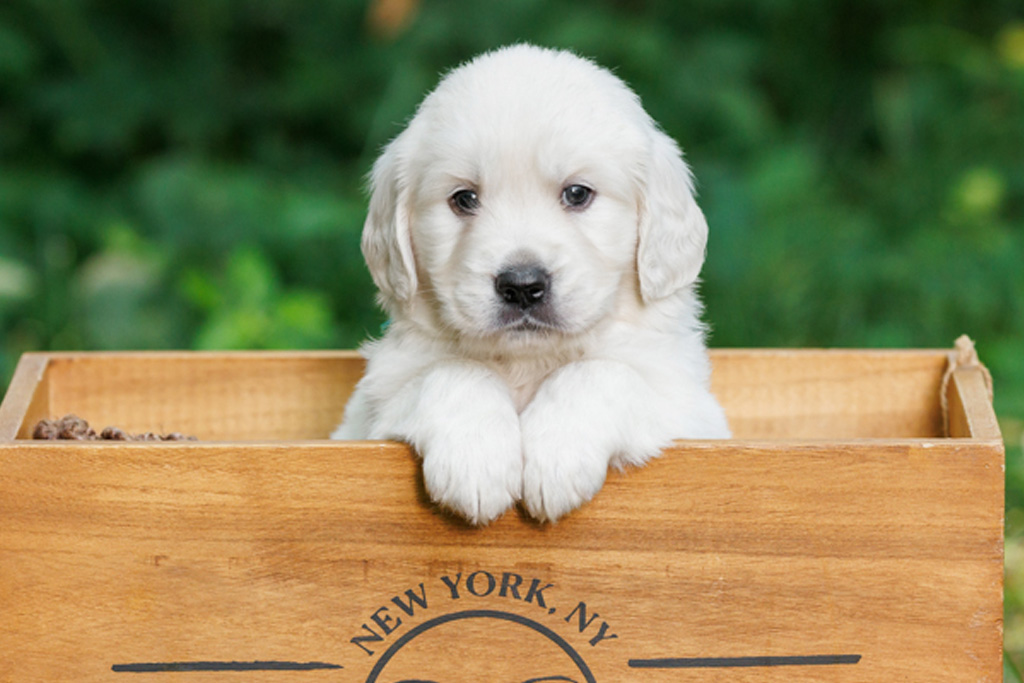
For many families considering an English Cream Golden Retriever, one of the most practical questions is also one of the most important: what happens when everyone has to go to work?
It is easy to picture the enjoyable parts of life with a Golden first. You think about family walks, weekends away, evenings on the couch, and all the small moments that make a dog feel woven into everyday life. Real life, however, also includes school days, meetings, appointments, errands, and stretches of time when your dog simply cannot come along.
The reassuring answer is that yes, many English Cream Golden Retrievers can learn to spend part of the workday comfortably on their own. The more useful answer, though, is that it depends on the individual dog, their age, their training, how long they will be alone, and what the rest of their day looks like.
Instead of focusing only on the clock, it helps to think about the entire routine. A dog who gets meaningful exercise, attention, mental engagement, and a comfortable place to rest will experience alone time very differently than a dog whose day offers little stimulation before or after the family leaves.
The goal is not to find the maximum number of hours your Golden can tolerate. It is to build a routine that helps them feel secure, comfortable, and well cared for while you are away.
English Cream Golden Retrievers Love Their People, but They Can Learn Independence
One of the qualities families love most about English Cream Golden Retrievers is how naturally they become part of family life. They often want to know what everyone is doing, settle nearby while you work, and happily follow the household rhythm from one room to the next.
That closeness is a wonderful part of the relationship, but it does not mean your Golden needs constant company to feel secure.
Healthy independence is an important life skill. Even in homes where someone is usually present, there will eventually be times when the dog needs to stay home, rest in another room, or spend part of the day without direct interaction.
A well-adjusted Golden can enjoy both sides of that relationship. They can be deeply affectionate and connected while also learning that quiet time alone is safe, predictable, and temporary.
Puppies Need a Different Plan Than Adult Dogs
Age is one of the biggest factors when deciding how much time your dog can comfortably spend alone.
A young puppy should not be expected to manage a full workday in the same way a mature adult might. Puppies need frequent bathroom breaks, meals at appropriate times, supervision, activity, and plenty of sleep, and they are still learning the basics of life in the household.
They are also still figuring out which items are toys, which rooms are accessible, how to settle, and what happens when their people leave.
During those early months, families should plan for more frequent support. That may include:
- A Midday Visit From A Family Member Or Neighbor
- A Dog Walker Or Pet Sitter
- A Staggered Family Schedule
- A Lunch Break At Home
- A Safe Puppy Area With Appropriate Supervision And Breaks
As your English Cream Golden Retriever grows, their ability to handle longer stretches between breaks usually increases. Independence should develop gradually with maturity rather than appear overnight just because your puppy reached a certain age.
Adolescents May Look Grown, but They Still Need Structure
The adolescent stage can be especially misleading because your Golden may already look very much like an adult dog.
They are bigger, stronger, and often capable of handling more activity and longer stretches of the day. At the same time, they may still be curious, impulsive, and surprisingly inventive when left with access to something interesting.
A dog who has ignored the throw pillows for months may suddenly decide that today is the day to investigate what is inside them. A shoe that has been sitting safely by the door may become fascinating for reasons known only to the dog.
This is where gradual freedom becomes important.
If your Golden is comfortable being alone but is not yet trustworthy throughout the entire house, provide a safe area rather than unlimited access. Over time, reliable behavior can earn more freedom, and that progression is often much smoother than expecting a young dog to handle too much too soon.
Adult Goldens Often Settle Into the Workday Rhythm Well
For many adult English Cream Golden Retrievers, the household work schedule eventually becomes part of the normal routine.
They learn what mornings look like, recognize the cues that mean everyone is leaving, and often develop favorite places to rest once the house becomes quiet. A well-adjusted adult dog may spend much of that time sleeping or relaxing rather than waiting anxiously for someone to return.
What matters is that the quiet part of the day is balanced by meaningful life outside of it.
A Golden who rests while the family is away and then enjoys a walk, some training, family interaction, and time outdoors may be perfectly content with that pattern. A dog who spends the workday alone and receives very little engagement afterward is living a very different life.
The alone time is only one part of the equation.
What Happens Before You Leave Matters
A good workday routine starts before the front door closes.
Whenever possible, give your Golden enough time in the morning to attend to their physical needs and enjoy a meaningful activity. Depending on your dog’s age and energy level, that might include a walk, a little retrieving in the yard, a few minutes of training, or time to sniff and explore outside.
The goal is not to exhaust your dog before work. It is to give them a satisfying start to the day so the transition into rest feels natural rather than abrupt.
Mental engagement can be just as valuable as physical exercise. A short training session or a few minutes of scent work may help your Golden feel fulfilled without turning the morning into an endurance challenge.
Create a Safe and Comfortable Space
Your dog’s environment matters just as much as the length of time you are away.
Young puppies may do best with a crate, exercise pen, or carefully puppy-proofed area. Older dogs who have demonstrated reliable household manners may eventually enjoy more freedom, but there is no reason to rush that progression.
Crate training can be particularly helpful because it gives puppies a familiar place to rest independently and can make travel, appointments, and changes in routine easier later on.
At Majestic Manor Goldens, crate introduction and conditioning are included in our optional Puppy Foundation and Good Puppy Citizen training programs. The goal is to help puppies see the crate as a calm, familiar space rather than something they encounter for the first time when the family suddenly needs to leave.
A crate should not automatically become the solution for an entire workday, though. Families still need to consider bathroom needs, comfort, movement, age, and whether a larger safe area makes more sense for the individual dog.
Midday Support Can Make a Long Day Easier
There is nothing wrong with building help into your routine.
For puppies, midday support is often necessary. For adult dogs, it can simply make a long day more comfortable and enjoyable.
A dog walker may provide a bathroom break and some exercise, while a family member, neighbor, or pet sitter may stop in for a short visit. Some dogs enjoy an appropriate daycare environment, although that option is highly individual and should be based on the dog’s comfort and temperament rather than assumed to be necessary.
Different households solve this in different ways, and that is perfectly fine. Some families stagger schedules, others use outside help several days a week, and some mature dogs settle comfortably through longer quiet stretches with a well-planned routine around them.
What matters is meeting the needs of the dog in front of you.
Give Your Golden Something Appropriate to Enjoy
A little enrichment can help make the transition into alone time feel easier.
A familiar food puzzle, safe stuffed toy, or another appropriate activity may give your dog something enjoyable to focus on as the house settles down. After that, there is nothing wrong with the rest of the morning becoming fairly uneventful.
Dogs do not need to be entertained for every minute they are alone.
Learning how to rest when nothing exciting is happening is part of healthy independence, and that skill can be just as valuable as exercise or training. The goal is to help your Golden feel secure enough that quiet time actually feels quiet.
Coming Home Is Part of the Routine
After several hours apart, your Golden will probably be very happy to see you, and that reunion is one of the best parts of having a dog.
Once everyone has had a moment to reconnect, give your dog an appropriate outlet for the needs that have been waiting during the day. A walk, backyard play, retrieving, training, or simply spending meaningful time together can help restore balance after a quiet stretch.
For many families, this becomes the natural rhythm of the workweek. The dog rests while the household is away and then becomes part of family life again once everyone returns.
That balance is especially important for a people-oriented dog. Your English Cream Golden Retriever may be capable of spending time alone, but companionship should still make up a meaningful part of their daily life.
Work-From-Home Families Should Practice Alone Time Too
Working from home can be a wonderful arrangement for a dog, but it can also create one unexpected challenge.
Some puppies grow up with almost no experience being alone because someone is always nearby. They wake up to a person in the room, nap beside someone who is working, and spend nearly every part of the day with constant access to family.
Then, eventually, everyone leaves for a wedding, appointment, dinner, or long afternoon away.
That sudden change can feel much bigger if the dog has never practiced independence.
Even if you work from home, build short periods of separation into your daily routine. Allow your Golden to nap in another room, spend time in their crate or resting space, and become comfortable when you step out for short periods.
Those experiences do not weaken your bond. They help your dog understand that your absence is normal, temporary, and safe.
Keep Departures Calm and Predictable
Leaving the house does not need to become an emotional event.
Long goodbyes can sometimes make the departure feel more significant than necessary, especially for a dog who is still learning that people leave and return regularly.
A calmer approach is often easier for everyone. Take care of your dog’s needs, settle them into their usual space, provide any enrichment you normally use, and leave in a familiar, matter-of-fact way.
The same principle applies when you return. You can absolutely be happy to see your Golden without turning every homecoming into a major production.
Over time, departures and arrivals become ordinary parts of family life rather than moments loaded with uncertainty.
Know the Difference Between Adjustment and Real Distress
A dog who would rather have you stay home is not necessarily experiencing separation anxiety.
Some Goldens may watch the door for a little while, need time to adjust when routines change, or become more attentive when they notice people preparing to leave. Those behaviors can be part of normal adjustment.
More significant separation-related distress looks different and may include:
- Persistent Panic When Left Alone
- Inability To Settle
- Escape Attempts
- Destructive Behavior Closely Tied To Departures
- Excessive Vocalization Or Other Signs Of Distress
If you are concerned about your dog’s response to being alone, speak with your veterinarian. A qualified reward-based trainer or veterinary behavior professional may also be helpful depending on what you are seeing.
It is always better to address a concerning pattern early rather than allowing everyone to struggle with it for months.
Focus on Your Dog’s Needs, Not a Maximum Number of Hours
When families ask how long an English Cream Golden Retriever can be left alone, it is tempting to look for a single number.
That number is rarely the most useful part of the answer.
What matters more is whether your dog’s physical, emotional, and practical needs are being met throughout the day. A mature dog with a reliable routine, appropriate exercise, a comfortable resting space, and a midday break when needed may do very well with a workday schedule. A younger puppy or a dog still learning to settle independently will usually need more support.
Instead of asking, “What is the longest my dog can stay home?” it is better to ask, “What does my dog need to be comfortable during the time I’m away?”
That keeps the focus where it belongs: on the individual dog rather than the clock.
Independence Is Something You Build Over Time
A confident adult dog who settles comfortably during the workday usually did not wake up one morning knowing how to do it.
The skill developed gradually.
Short absences, positive crate experiences, predictable routines, appropriate exercise, and increasing freedom all contribute to that confidence. As your Golden matures, their needs will change, and the routine should change with them.
Make sure the hours outside the workday include movement, mental engagement, companionship, and the ordinary family moments that make life fulfilling.
English Cream Golden Retrievers are deeply connected companions, but connection and independence are not opposites.
A secure dog can enjoy both, and when that balance is built thoughtfully, families can leave for work knowing their Golden is comfortable, confident, and ready to rejoin family life when everyone comes home.
Frequently Asked Questions
Can English Cream Golden Retrievers stay home while their owners work?
Yes, many English Cream Golden Retrievers can learn to spend part of the workday alone comfortably. Age, training, temperament, the length of the absence, bathroom needs, exercise, and the overall daily routine all play a role.
Can a Golden Retriever puppy be left alone for a full workday?
Young puppies generally need more frequent bathroom breaks, meals, supervision, and interaction than adult dogs. Families working full days should plan for appropriate midday care until the puppy is mature enough for longer stretches.
How long can an adult English Cream Golden Retriever be left alone?
There is no single appropriate number for every dog. Comfort depends on the individual Golden, their routine, previous training, health, bathroom needs, and what happens before and after the time alone.
Should I crate my Golden while I am at work?
Crates can be helpful for puppies and dogs who are comfortable with them, but they should not automatically be used for an entire workday regardless of the dog’s needs. Age, crate comfort, bathroom requirements, and the availability of a larger safe area should all be considered.
Does my Golden need a dog walker every day?
Not necessarily. Some dogs benefit from a midday walk or visit, while others have schedules that make it unnecessary. Puppies and dogs facing particularly long days are more likely to need additional support.
What should I do before leaving my Golden for work?
Give your dog an opportunity to use the bathroom and provide an appropriate amount of physical or mental activity. Settle them into a safe, familiar environment and keep the departure calm and predictable.
Should I practice leaving my Golden alone if I work from home?
Yes. Short, positive periods of independence help dogs learn that they can feel secure even when their people are not nearby. This can make future schedule changes, travel, and everyday absences much easier.
How do I know if my Golden is experiencing separation anxiety?
Persistent panic, escape attempts, significant destruction associated with departures, or an inability to settle may indicate more than ordinary adjustment. Speak with your veterinarian if you are seeing concerning or persistent behavior when your dog is left alone.
Can Majestic Manor’s puppy training help with independence?
Majestic Manor Goldens’ Puppy Foundation and Good Puppy Citizen programs include crate introduction or conditioning along with practical household skills and routines. These can provide a helpful foundation, but families should continue practicing independent settling and maintaining training after their puppy comes home.