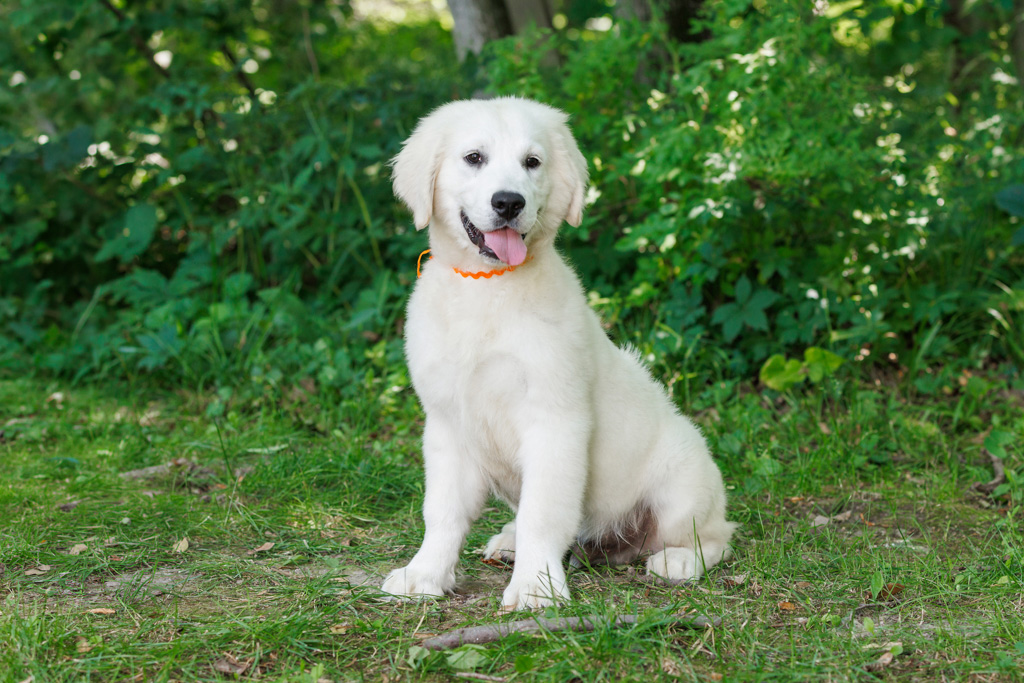
You may know your English Cream Golden Retriever as the dog who happily carries a favorite toy from room to room, notices every crumb that reaches the kitchen floor, or pauses during a walk to investigate a scent you cannot detect at all.
Those behaviors are more than amusing little habits. They reflect a natural ability that has been part of the Golden Retriever for generations.
Golden Retrievers were originally developed as sporting dogs capable of locating and retrieving game across land and water. Today, most English Cream Golden Retrievers spend their lives as beloved family companions, but many still retain the curiosity, willingness to search, and enthusiasm for finding things that made the breed such a capable working partner.
Encouraging those instincts does not require specialized equipment or formal scent-detection training. With a few treats, familiar toys, and a little creativity, you can create scent-based activities that engage your Golden’s mind and bring a new kind of purpose to playtime.
Why Scenting Is So Engaging for Dogs
People tend to experience the world visually. We notice colors, movement, faces, and changes in the environment around us.
Dogs gather much more of their information through scent.
When your Golden pauses to smell a spot in the yard or spends several moments investigating where another dog walked, they are not necessarily being distracted. They are processing information about their environment.
Giving dogs permission to use their noses fosters a form of mental engagement distinct from running, fetching, or practicing obedience commands. Physical exercise remains important, but it does not satisfy every need on its own. Scent games ask your dog to slow down, make decisions, solve a problem, and follow information that only they can fully understand.
That can be especially useful on rainy days, during periods of extreme heat or cold, or anytime your English Cream Golden Retriever needs something enriching that does not require intense physical activity.
English Cream Golden Retrievers Have a Natural Reason to Search
English Cream Golden Retrievers share the same sporting heritage as other Golden Retrievers. The breed was developed to work cooperatively with people, locate fallen game, and retrieve it carefully.
A family scent game is obviously very different from traditional fieldwork, but it draws on some of the same natural tendencies. Your dog must look for something, follow clues, stay engaged, and complete a task with you nearby.
Many Goldens also enjoy carrying objects, retrieving toys, and bringing discoveries back to their people. Scent activities can combine those familiar behaviors in ways that feel natural and rewarding.
Every dog is an individual, of course. Some English Cream Golden Retrievers will immediately understand a game of search, while others may need a little encouragement. The purpose is not to test your dog or compare them to anyone else. It is simply to offer an activity that gives their nose and brain something interesting to do.
Begin with a Game Your Golden Can Easily Win
The best way to introduce scent games is to make the first few searches almost impossible to get wrong.
Choose something your dog already values, such as a favorite treat, ball, or toy. Let them see it, place it a short distance away, and use a consistent cue such as “find it” or “search.”
When your dog moves toward the item, praise them and allow them to enjoy the reward. Repeat the game several times before making the object less visible.
Early success matters. If the first game is too difficult, your dog may become confused, look to you for help, or simply lose interest. A few easy wins teach them what the cue means and help build enthusiasm for searching.
As your Golden begins to understand, you can place the item behind the leg of a chair, partly beneath a towel, or just around the corner of an open doorway. Increase the difficulty slowly rather than jumping from an obvious treat to an elaborate search across the entire house.
Turn “Find It” Into an Everyday Game
One of the easiest scenting activities requires nothing more than a few pieces of your dog’s regular food or treats.
Ask your Golden to wait nearby while you place a treat in an easy-to-find location. Release them with your chosen search cue and let their nose lead the way.
Once they understand the game, begin hiding treats in different areas of the room. You might place one beside a table leg, along the edge of a dog bed, or behind an open door where it is safe and accessible.
Avoid repeatedly pointing toward the hiding place. Part of the value comes from allowing your dog to work through the problem independently. You can offer encouragement, but try not to solve the search for them.
Over time, you can ask your Golden to wait in another room while you create the search. This prevents them from watching where the treats are placed and encourages them to depend more fully on scent.
Create a Simple Container Search
A few empty cardboard boxes can become an effective at-home scent game.
Arrange several open boxes on the floor and place a treat in one of them. At first, let your dog watch you set up the game. Give the search cue and praise them when they investigate the correct box.
As the game becomes familiar, move the boxes into different positions or add another empty container. You can eventually place a treat in a box while your dog waits elsewhere.
Container searches are useful because they create a clear, controlled search area. They also make it easy to adjust the challenge without making the activity frustrating.
Make sure every container is clean and free from staples, packing materials, tape, or anything your dog could swallow. Supervise the entire search, particularly if your Golden enjoys carrying or tearing cardboard.
Let Your Golden Search for a Favorite Toy
Food is often the easiest way to introduce scent games, but it does not have to remain the only reward.
If your English Cream Golden Retriever has a favorite ball, plush toy, or retrieving item, you can teach them to search for that object as well.
Begin by placing the toy nearby and asking your dog to find it. Reward any clear movement toward the object with praise, play, or a treat. Gradually move it farther away or place it partly out of view.
Once your dog understands the idea, hide the toy in another room while they wait. When they locate it, allow them to carry it, retrieve it to you, or enjoy a short play session.
This version of the game can be especially satisfying for Goldens because it combines scenting with retrieving and interaction with their people.
Play Hide-and-Seek with the Family
Your Golden can also search for people.
Have one family member keep the dog in place while another person hides somewhere nearby. Start with an easy hiding location and call the dog once. When your Golden finds the person, celebrate with affection, praise, or a small reward.
As the game becomes easier, the person can hide farther away or stop calling after the initial cue.
This can be a wonderful family activity, particularly for children who understand how to participate calmly and safely. It reinforces recall, encourages your dog to use scent and sound together, and turns the entire household into part of the game.
Keep hiding places appropriate for your dog’s age and mobility. Your Golden should never need to climb, jump from furniture, squeeze into a dangerous space, or enter an area that is normally off-limits.
Make Mealtime More Interesting
Not every scent activity needs to feel like a formal training session.
You can occasionally use part of your dog’s meal for a supervised search around a safe room or fenced yard. A snuffle mat or food puzzle can offer a similar opportunity by encouraging your Golden to locate individual pieces of food rather than eating everything immediately from a bowl.
When using food for enrichment, remember that treats and search rewards still count toward your dog’s daily intake. Using part of a regular meal can help keep the activity balanced, particularly for puppies or dogs whose weight needs careful monitoring.
Food searches should also remain calm and controlled in homes with multiple dogs. Separate dogs when necessary so that each one can work without competition or tension.
Give Sniffing More Room During Walks
Encouraging scenting at home can extend beyond indoor games.
Some walks can be structured around exercise and leash manners, while others can allow more time for exploration. A slower “sniff walk” gives your Golden permission to investigate safe areas without being hurried past every interesting scent.
You do not have to give up all structure. Your dog should still respond to you, move away from unsafe items, and walk appropriately when needed. The difference is that the pace and purpose of the outing are more relaxed.
These walks can be especially valuable for young English Cream Golden Retrievers who are learning about the world. They provide new information and mental engagement without requiring every outing to become a long or physically demanding adventure.
Build Difficulty Without Creating Frustration
As your Golden gains experience, it can be tempting to make every game harder. However, scent work should remain enjoyable.
Increase only one part of the challenge at a time. You might make the hiding place less visible, expand the search into a second room, introduce more empty boxes, or move the game outdoors. Changing everything at once can make it difficult for your dog to understand what is expected.
Watch how your Golden works. A dog who is focused, sniffing actively, and continuing to search is probably enjoying the challenge. A dog that repeatedly looks to you, wanders away, scratches at random objects, or becomes overly excited may need an easier setup.
Ending after a successful search helps preserve enthusiasm. A five-minute activity that leaves your dog eager to play again is often more valuable than continuing until they become tired or frustrated.
Let Your Dog Do the Thinking
One of the most meaningful things about scent games is that the dog has information the person does not.
In many types of training, we direct the dog toward a specific behavior. During scent work, we have to step back and trust the dog’s nose.
This can strengthen communication in a different way. You begin to notice how your Golden searches, how their body changes when they catch a scent, and what they do when they believe they have found the item.
Your dog also learns that making an independent decision can lead to success.
That does not mean allowing the search to become chaotic. Clear boundaries, safe environments, and familiar cues still matter. Within that structure, however, the activity should give your Golden room to investigate and solve the problem.
Keep Every Search Safe
At-home scent games should use items that are safe for your dog to locate and, when appropriate, consume or carry.
Do not hide food near medications, cleaning products, electrical cords, trash cans, toxic plants, sharp objects, or areas your dog should not learn to investigate. Avoid hiding rewards inside furniture or containers that could collapse, trap a paw, or encourage destructive behavior.
For beginner games, familiar food and toys are generally simpler than introducing concentrated odors. Formal scent-work sports may use specific essential oils prepared and contained according to established protocols. Those materials should not be improvised or left where a dog can come into direct contact with or ingest them.
If you want to move beyond casual home games into formal scent work, a qualified instructor can help you introduce target odors correctly and safely.
Scenting Should Complement the Rest of Your Golden’s Day
Scent work can be wonderfully enriching, but it should not replace walks, social connection, training, retrieving games, or appropriate physical exercise.
Instead, think of it as another way to meet your dog’s needs.
On a busy morning, a short food search may give your Golden something purposeful to do. On a stormy afternoon, finding a favorite toy can provide indoor engagement. During a family walk, allowing extra time to sniff can help your dog experience the outing in a richer way.
The best activities are often the ones that fit naturally into everyday life.
A Simple Instinct Can Create a Meaningful Connection
Your English Cream Golden Retriever does not need to become a competitive scent-work dog to benefit from using their nose.
A treat hidden beneath a towel, a favorite ball waiting in another room, or a family member tucked behind a doorway can turn an ordinary day into an engaging experience.
These games give your Golden the chance to use a natural ability, solve a problem, and share a small success with you. They also offer families another way to appreciate just how capable and perceptive these dogs truly are.
Sometimes the most rewarding enrichment does not require a long outing or a basket full of new toys. It simply requires giving your Golden the time, space, and encouragement to follow their nose.
Frequently Asked Questions
Are English Cream Golden Retrievers good at scent work?
English Cream Golden Retrievers share the Golden Retriever’s sporting and retrieving heritage. Individual interest and ability vary, but many enjoy searching for food, toys, and familiar people.
How young can a puppy begin scent games?
Simple, age-appropriate searches can begin during puppyhood. Keep the hiding places easy, use safe rewards, and make each session brief and positive.
How long should an at-home scent session last?
A few minutes may be enough when a dog is first learning. It is generally better to stop after a successful search while your Golden is still engaged than to continue until they become distracted or frustrated.
Can scent games replace a walk?
Scent games provide valuable mental engagement, but they should complement rather than replace appropriate physical exercise, outdoor experiences, and social interaction.
What should I use for a beginner scent game?
A familiar treat, a piece of regular food, a favorite ball, or a well-loved toy is usually a good starting point. Choose something your dog already values and can locate safely.
Should I use essential oils for scent training at home?
Beginners do not need essential oils to enjoy scent games. Formal scent-work programs use specific odors and careful handling procedures. Work with an experienced instructor before introducing concentrated target odors.