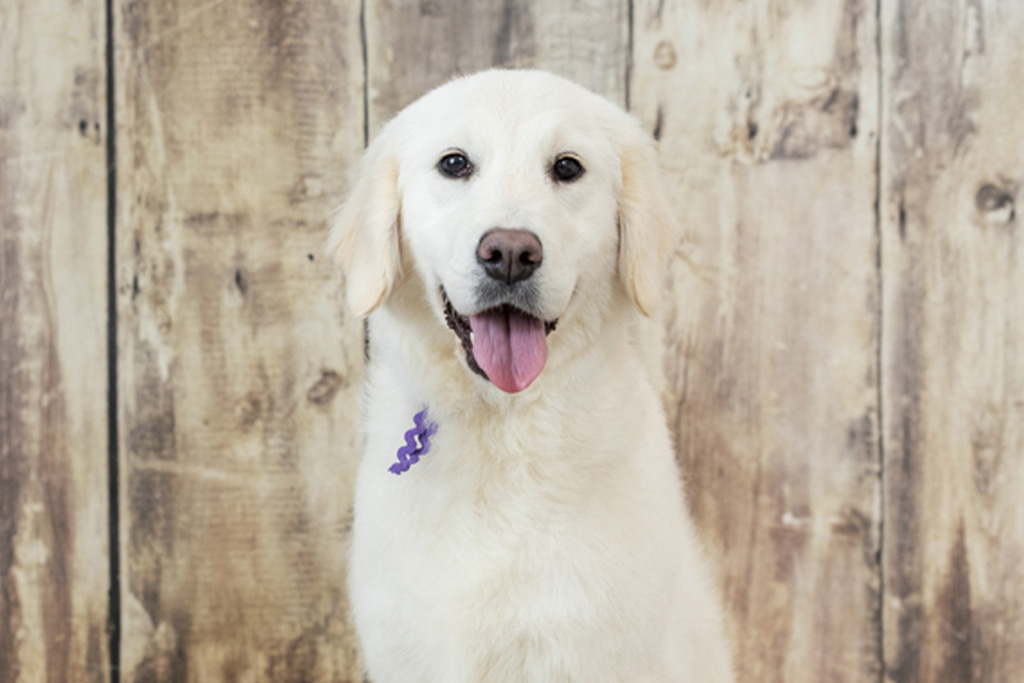
There are few changes quite as exciting as bringing a new baby home.
For months, your family has been preparing. There is new furniture in the house, different routines beginning to take shape, and plenty of anticipation about what life will look like once your newest family member arrives.
Your English Cream Golden Retriever may not understand exactly what is coming, but they almost certainly know that something is changing.
Dogs notice much more of our daily lives than we sometimes realize. They notice when rooms are rearranged, when schedules shift, when new objects appear, and when the people they love begin behaving differently. By the time you walk through the door with your baby, your Golden has already been experiencing the transition in their own way.
That is why the best introduction begins before the baby ever comes home.
With thoughtful preparation, positive experiences, clear boundaries, and plenty of patience, you can help your English Cream Golden Retriever adjust to the newest family member without feeling pushed aside.
And while everyone dreams about that first sweet photo of baby and dog together, the real goal is much bigger: creating the foundation for a safe, comfortable relationship that can grow right alongside your child.
Start Preparing Before the Baby Arrives
If you know your dog’s routine will change after the baby comes home, begin making those adjustments in advance.
Perhaps morning walks will happen earlier. Maybe your Golden will no longer have access to a particular room, or their bed needs to be moved because the nursery has taken over a familiar space. If your dog currently receives most of their exercise at a time you know will become difficult with a newborn, begin experimenting with a new schedule.
Making those changes gradually allows your Golden to adjust without associating every loss of routine or privilege directly with the baby’s arrival.
You can also begin introducing the new sights and sounds that will soon become part of everyday life. Let your Golden become familiar with the stroller, bassinet, baby gates, swings, and other equipment while the house is still relatively calm.
Baby sounds can also be introduced gently.
Recordings of crying or other infant noises can be played quietly at first and paired with something pleasant, such as a treat or relaxed time with you. The goal is not to overwhelm your dog with a soundtrack of crying babies. It is simply to make these unfamiliar sounds a little less surprising when they eventually become real.
Brush Up on the Skills You’ll Use Most
You do not need a perfectly trained dog before bringing a baby home. A few reliable everyday skills, however, can make life substantially easier.
Think less about impressive obedience and more about practical household manners.
Can your Golden settle on a bed while you’re occupied? Can they wait rather than rushing through a doorway? Are they comfortable spending time in their crate or another familiar resting area? Can you redirect them away from something interesting when necessary?
A strong “place” behavior can be particularly useful. There will be moments when you’re feeding the baby, answering the door, preparing bottles, or simply trying to manage several things at once. Giving your dog a familiar place to settle provides clear direction rather than leaving them to guess what to do.
Majestic Manor Goldens’ Puppy Foundation and Good Puppy Citizen programs introduce many of these practical skills, including crate conditioning, waiting, leash manners, handling, and training in the presence of distractions. The Good Puppy Citizen program also introduces place training.
Those early skills are valuable, but the family still needs to practice them at home. Before the baby arrives is a wonderful time to reinforce the behaviors you’re most likely to rely on during those busy first months.
Make New Boundaries Feel Normal
Babies come with a lot of things that are suddenly off-limits.
Diaper bags, stuffed animals, blankets, pacifiers, bottles, and eventually children’s toys can all be remarkably interesting to a curious Golden.
Rather than waiting until your baby arrives to introduce every new boundary, start early.
If the nursery will have limited access, establish that expectation before the baby comes home. If your Golden will need to stay outside a certain area while the baby is on the floor, begin using gates or practicing place now.
The same applies to baby items. Give your dog appropriate toys and chews of their own while teaching them that the new objects appearing around the house are not theirs.
This is particularly helpful for retrievers, who often enjoy picking things up and carrying them around. Your dog’s interest in a stuffed animal or tiny sock is not personal. To them, you have simply filled the house with an impressive collection of new things.
Good management helps everyone succeed while those boundaries are being learned.
When You Come Home, Give Everyone a Moment
The day you bring your baby home is exciting, emotional, and often exhausting.
Your Golden may also be extremely excited to see you, particularly if you have been away for a few days.
Rather than making the baby’s arrival the center of that initial excitement, give your dog a chance to greet the returning parent first without the baby in their arms. Let the initial enthusiasm settle before beginning the introduction.
There is no need to rush.
Your dog does not have to meet the baby within the first five minutes to form a wonderful relationship later.
Once things are calmer, bring your Golden into the same space under control. A leash can give you an added layer of safety and prevent an enthusiastic greeting from becoming overwhelming.
Allow your dog to notice the baby from a comfortable distance first. Reward calm behavior and let curiosity unfold gradually.
Let Your Golden Approach at Their Own Pace
We tend to put a lot of emotional weight on first meetings.
We imagine our Golden gently sniffing the baby and instantly understanding that this tiny person is now part of the family.
Sometimes the first meeting really is wonderfully uneventful. Other dogs need more time to understand this strange little person who smells unfamiliar and occasionally makes very surprising noises.
Both responses can be perfectly manageable.
Avoid forcing your dog closer because you want the introduction to happen. Let your Golden observe first and approach gradually when they are calm.
You can reward relaxed behavior around the baby so that the baby’s presence begins to predict good things. This might mean a treat for quietly settling nearby or praise when your dog calmly looks toward the baby and then returns their attention to you.
The goal is not fascination.
Comfort is enough.
You Don’t Need Your Dog Right Next to the Baby
One of the most important things families can remember is that closeness is not proof of a good relationship.
Your Golden does not need to sleep beside the bassinet, put their face next to the baby’s, or remain within touching distance to show that they accept the new family member.
Sometimes the healthiest early relationship looks wonderfully ordinary.
The baby is being fed on the couch while your English Cream Golden Retriever rests comfortably across the room. You change a diaper while your dog chews nearby. The baby cries, your Golden looks up for a moment, realizes everything is okay, and goes back to sleep.
Those quiet moments are meaningful because your dog is learning that the baby fits into the household rhythm.
There is no need to manufacture intimacy before everyone is ready.
Supervision Is Non-Negotiable
No matter how gentle, well-trained, or trustworthy your English Cream Golden Retriever has always been, dogs and babies should not be left alone together.
That rule applies to every dog.
Babies move unpredictably, make unusual sounds, and eventually begin to reach, crawl, grab, and explore. Dogs are animals with their own boundaries and reactions, even when they have spent their entire lives being loving family companions.
Active supervision means more than simply being somewhere in the room. An adult should be close enough and attentive enough to intervene if necessary.
When you cannot actively supervise, use physical separation. Baby gates, crates, pens, doors, and other barriers help everyone stay safe without turning separation into something negative.
This is not about distrusting your dog. It is about removing situations in which either the dog or the baby is asked to manage more than they reasonably can.
Continue Giving Your Golden Their Own Time With You
A new baby naturally changes where your attention goes.
For a dog who has spent years being deeply woven into family routines, that can feel like a significant shift.
You do not need to recreate exactly what life looked like before the baby. Instead, look for small ways to preserve the connection your Golden already knows.
A morning walk, a few minutes of retrieving outside, some quiet brushing in the evening, or simply sitting together once the baby falls asleep can help maintain that familiarity.
These moments do not need to be elaborate.
Your dog wants to know that they still belong.
It can also help to include your Golden in normal family activities when doing so is comfortable and safe. A walk with the stroller, time together in the backyard, or simply relaxing in the same room helps your dog understand that family life has expanded rather than moved on without them.
Pay Attention to What Your Dog Is Telling You
Dogs communicate long before they bark or growl.
Your Golden may turn their head away, move farther from the baby, become unusually still, lick their lips repeatedly, or simply choose to leave the room. Those behaviors can be your dog’s way of asking for more space.
Respect that request.
Never require your Golden to remain next to the baby for a photo, greeting, or interaction when they are trying to move away.
Giving dogs the freedom to create distance can prevent discomfort from escalating.
If your dog repeatedly seems worried around the baby, cannot settle, guards spaces or objects, or shows behavior that concerns you, seek help from your veterinarian and a qualified reward-based behavior professional. It is much better to ask for guidance early than to hope a concerning pattern disappears on its own.
Remember That the Relationship Changes Again When Baby Starts Moving
The newborn phase is only the beginning.
In some ways, a sleeping newborn can be relatively easy for a dog to understand. Babies become much more interesting when they start rolling, crawling, reaching, dropping food, making louder noises, and eventually walking.
That means the introduction between your child and your Golden is not really one event.
It is an ongoing process.
As your baby becomes mobile, return to management tools such as gates and designated dog spaces. Make sure your Golden always has somewhere they can rest without being followed.
As your child grows, you will eventually begin teaching them how to interact appropriately with the dog as well. Gentle touches, respecting rest, leaving food and toys alone, and giving the dog space all contribute to that education.
The responsibility remains with the adults while the child is young.
A Golden can be incredibly patient and affectionate, but patience should never be something children are encouraged to test.
Give the Relationship Time to Become Its Own Thing
There is something undeniably special about watching a child grow up with a dog.
But the relationships families treasure most are rarely formed during a single carefully staged introduction.
They grow through ordinary life.
Your baby becomes a toddler who laughs when your Golden walks into the room. Your dog learns where the high chair is and somehow becomes very interested in mealtime. Walks become something everyone does together. Eventually, the child begins to throw a ball, help brush the dog, and understand that this furry family member has feelings and needs, too.
None of that needs to happen quickly.
The best thing you can give the relationship early on is a foundation of safety, predictability, positive experiences, and mutual respect.
Your Family Is Growing, Not Being Replaced
Before a new baby arrives, it is completely normal to wonder how your dog will feel about the changes ahead.
For many families, their English Cream Golden Retriever was their first baby in a very real sense. They were there for quiet evenings, weekend adventures, major life changes, and all the ordinary days in between.
Bringing a child home does not erase that relationship.
It adds to it.
Your routines will change. Your attention will be divided differently. There may be mornings when the dog walk is shorter than planned and evenings when everyone is simply trying to make it to bedtime.
That is real family life.
Your Golden does not need everything to remain exactly the same. They need consistency where you can provide it, guidance when something is new, their own comfortable space, and the reassurance that they are still very much part of the family.
With patience, that new rhythm begins to feel normal.
And one day, you may look across the room and realize that the dog who once cautiously watched this tiny new person has quietly become part of some of your child’s earliest memories.
Frequently Asked Questions
When should I start preparing my Golden Retriever for a new baby?
Ideally, begin several months before the baby arrives. This gives you time to gradually adjust routines, introduce baby equipment and sounds, reinforce training, and establish any new household boundaries without changing everything at once.
How should I introduce my English Cream Golden Retriever to my newborn?
Keep the first introduction calm and controlled. Allow your dog to settle after you arrive home, use a leash if helpful, begin at a comfortable distance, and reward relaxed behavior. Do not force your Golden to approach or interact with the baby.
Can my Golden Retriever sniff my newborn?
A calm, controlled opportunity to investigate may be appropriate once your dog is relaxed, but there is no need to rush close contact. Avoid face-to-face interaction and do not allow licking of a young infant.
Is it safe to leave my Golden Retriever alone with the baby?
No. Babies and young children should never be left unsupervised with a dog, regardless of breed, temperament, training history, or how trustworthy the dog has previously been.
What if my Golden seems uninterested in the baby?
That can be perfectly fine. Your dog does not need to be fascinated by the baby. Calmly accepting the baby’s presence and continuing normal routines can actually be a very positive response.
What should I do if my Golden seems nervous around the baby?
Give your dog more space and avoid forcing interaction. Look for situations that seem especially difficult and use gates, distance, or another resting area as needed. Persistent anxiety, guarding, growling, or other concerning behavior should be discussed with your veterinarian and a qualified reward-based behavior professional.
Will things change when my baby starts crawling?
Yes. A mobile baby creates an entirely new situation for a dog. Increase supervision and management, provide your Golden with child-free resting areas, and prevent the child from following, grabbing, climbing on, or interfering with the dog’s food, toys, and sleep.
Can Majestic Manor’s training programs help prepare a puppy for family life with children?
Majestic Manor Goldens’ Puppy Foundation and Good Puppy Citizen programs introduce practical household skills including crate conditioning, leash manners, waiting, handling, basic commands, and working around distractions. The Good Puppy Citizen program also includes place training. Families should continue reinforcing those skills at home as their household grows and changes.